
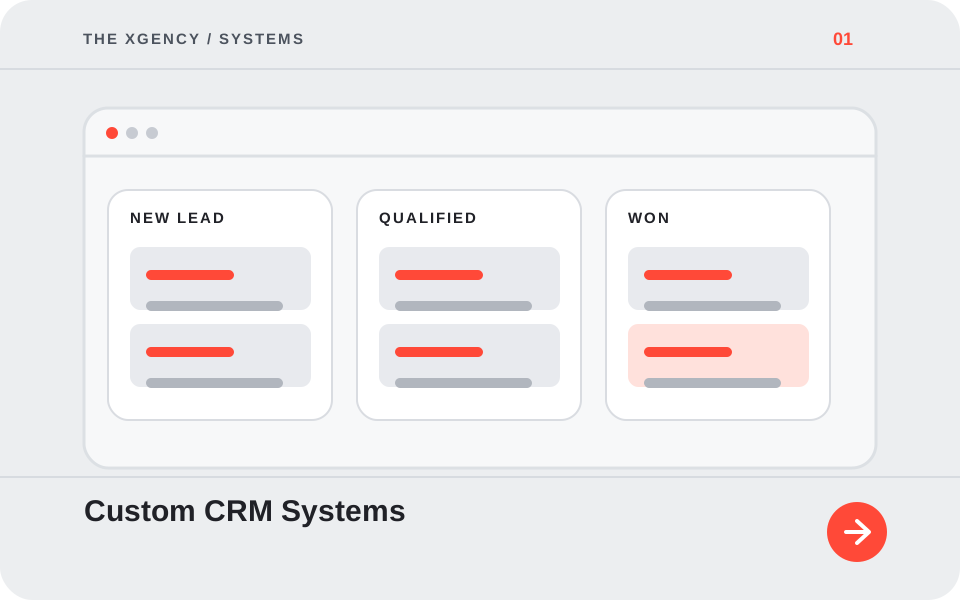
A CRM structured around your pipeline, records, permissions, and day-to-day work.
When this helps
When leads, accounts, and delivery notes live in separate places, nobody has a dependable picture of the relationship. A useful CRM should reflect how the team actually sells and serves, not force a generic pipeline onto it.
How we approach it
We map the records, stages, ownership rules, and daily decisions first. Then we design the views, permissions, automations, and handoffs around those needs, with migration and training planned before launch.
What you can expect
A working customer workspace with clearer ownership, fewer duplicate updates, and a practical handover for the people who will use it.
A CRM structured around your pipeline, records, permissions, and day-to-day work.
Map your pipeline and record types
Design team roles and daily views
Plan migration, training, and handover
The deliverables, integrations, access and timeline are agreed in a written scope before work begins.
Discuss this service